Most fitness blogs never make it past their first ten posts. Not because the writers lack passion, and not because the topic is saturated beyond saving — but because the posts read like everyone else’s, target keywords no one searches for, and skip the structural choices that decide whether Google sends traffic. Writing a fitness blog is less about being a gifted writer and more about being a clear, credible operator who understands what readers and search engines both want on the page.
This guide walks through how to write a fitness blog from the first niche decision through the post-publish checklist. It is built for two readers: the fitness professional who wants a content channel that actually grows, and the writer who has been hired to produce health and fitness blog writing that ranks. Both groups face the same problems and benefit from the same playbook.
What a Fitness Blog Actually Is
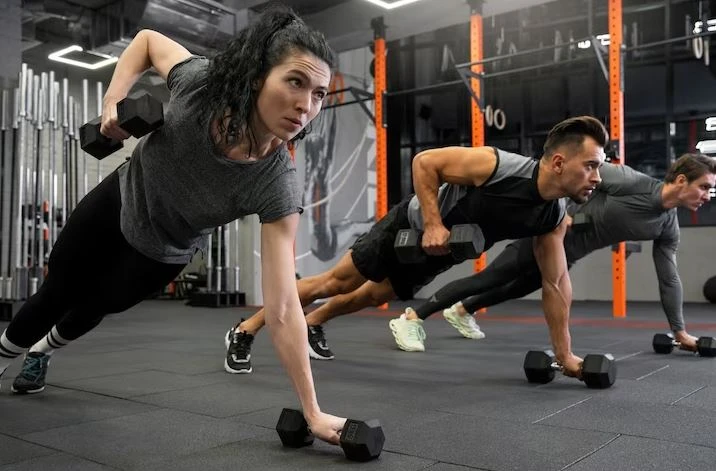
A fitness blog is a publication that helps a specific group of people make better decisions about how their body moves, performs, and recovers. The keyword there is specific. The market for generic “get healthy” content closed years ago — search results are now dominated by sites that own a clear angle, whether that is strength for runners, postpartum recovery, kettlebell-only training, or fitness for people over fifty.
The blogs that work share three traits. They are written by, or with input from, someone with genuine credentials or lived expertise. They publish consistently around a tight content theme. And they treat each post as a standalone answer to a real search query rather than a journal entry. If your blog cannot pass those three tests, no amount of polish on individual posts will move it.
Why Starting a Fitness Blog Still Makes Sense
Search demand for fitness content has not slowed. People are still typing in workout plans, injury questions, supplement comparisons, and form checks every minute of every day. What has changed is the quality bar. AI-generated filler has flooded the space, which means a real human voice with real expertise now stands out more, not less. A fitness blog still works as a lead generator for coaches, as the content engine behind a product, and as a standalone income stream through ads, affiliates, and digital products.
The catch is that the early months are quiet. Traffic builds slowly because Google has to learn what your site is about and decide whether to trust it. Anyone starting a fitness blog who expects traffic in the first thirty days is going to quit by day sixty. Plan for six to twelve months of consistent publishing before search traffic becomes meaningful, and the math works out.
Step 1: Pick a Niche Narrow Enough to Win

“Health and fitness” is not a niche. It is a category with millions of competing pages and no clear angle. To rank, and to give readers a reason to subscribe, you need to narrow down to an intersection — a specific audience plus a specific approach plus a specific outcome.
A useful test: can you finish the sentence “I help [who] do [what] using [how]” in fifteen words or less? “I help desk workers in their forties build strength using thirty-minute home workouts” is a niche. “I write about fitness” is not. The narrower you go at the start, the easier it is to broaden out later once you have authority.
| Fitness Niche | Who It Serves Best | Example Post Ideas |
| Strength training | Lifters, gym-goers, recomposition seekers | Progressive overload plans, compound lift breakdowns |
| Home workouts | Busy parents, remote workers, beginners | No-equipment routines, small-space HIIT |
| Yoga and mobility | Stressed professionals, recovery-focused readers | Morning flows, desk-worker stretches |
| Running and endurance | 5K-to-marathon trainees, weekend racers | Race plans, pacing strategy, gear reviews |
| Nutrition and macros | Body recomposition, cutting or bulking phases | Meal prep guides, protein math, deficit calculators |
| Mental fitness | Burnout-prone readers, holistic wellness seekers | Habit stacking, mindset shifts, recovery protocols |
| Over-40 fitness | Masters athletes, joint-aware trainees | Low-impact strength, hormone-aware programming |
If you are stuck choosing, browsing a structured list of fitness topic ideas or yoga blog post ideas is a fast way to test which corner of the market you actually have something to say about.
Step 2: Build a Keyword-Backed Content Plan
Once the niche is set, the next move is not to start writing. It is to map demand. Open a free keyword tool — Google Keyword Planner, Ubersuggest, or Ahrefs Webmaster Tools — and pull a list of the actual phrases people in your niche search for. Sort by volume and by difficulty. Your first thirty posts should mostly target low-to-medium difficulty queries with clear intent, even if the volume looks small.
Three buckets are worth filling on day one. Foundational pillar posts that cover a broad topic in depth, supporting posts that answer specific sub-questions and link back to the pillar, and comparison or list posts that match buyer-style queries. This structure is what gives a fitness blog its long-term ranking power: clusters of related content that signal authority to Google instead of scattered, unrelated articles.
For the mechanics of turning a keyword list into a publishing schedule, the workflow in how to create a content plan and the strategy behind cornerstone content both apply directly to fitness sites.
Step 3: Choose a Name and Platform You Will Not Outgrow
The name matters less than people think, but a few rules save trouble later. Keep it short, easy to spell, and broad enough to survive a pivot. “DumbbellDawn” pigeonholes you into one piece of equipment forever; “StrongPath” leaves room to grow. Check that the .com is available, that the handle is free on the social platforms you actually plan to use, and that nothing similar already ranks in your niche.
On platform: WordPress on a self-hosted plan remains the default for serious fitness blogs because it gives full control over SEO settings, schema, and monetization. Ghost is a clean alternative for writers who want simplicity. Substack works if your model is email-first and you do not care about ranking on Google. Shopify or Squarespace work if the blog is secondary to product sales. Pick based on where you want traffic to come from, not on which interface looks nicest in a demo.
Step 4: Write Posts That Match What Readers Came For

Every fitness blog post needs to do one job well. “Best protein powder for women over 40” is a buying-decision post and needs comparisons, criteria, and clear picks. “How to deadlift safely” is an instructional post and needs step-by-step form cues, common mistakes, and ideally photos or video. “What is zone 2 cardio” is an explainer and needs a clean definition, a why-it-matters section, and a how-to-apply section. Mixing intents inside one post is the most common reason fitness articles underperform — readers bounce because they didn’t get what they came for.
Structure Each Post for Skimmers First
Most readers will not read the post. They will scan it. Build for that by leading with a short, direct intro that confirms they’re in the right place, breaking the body into descriptive H2s that double as answers, and using bullets, tables, and pull quotes to give the eye somewhere to land. The reader who scans should be able to leave with the main answer; the reader who reads should be rewarded with depth.
Write Like a Coach, Not a Brochure
Fitness readers respond to specificity and authority, not to corporate hedging. Tell them exactly how many sets, exactly what tempo, exactly which mistake to avoid. Cite studies where they matter, but do not pad the post with citations to look credible. The voice that works in this niche is closer to a good coach giving direct cues than to a magazine article tiptoeing around a topic.
Show Credentials Without Bragging
Google’s quality guidelines explicitly favor expertise, experience, authoritativeness, and trust on health-related topics. A short author bio, links to certifications or relevant experience, and citations to recognized bodies like the ACSM, NSCA, or WHO go a long way. If you are not certified, partnering with someone who is — and crediting them — is more sustainable than pretending.
Keep your blog fresh and engaging with our professional writers!
Engage Readers
Step 5: Optimize for Search Without Killing the Read
On-page SEO for a fitness blog is not complicated. The primary keyword goes in the title, the URL, the first hundred words, one H2, and the meta description. Related phrases — variations and synonyms — should appear naturally throughout the body. Images need descriptive file names and alt text. Internal links should point to two or three related posts on your site using anchor text that describes the destination.
What kills fitness posts in rankings is not missing checkboxes; it is thin content that doesn’t fully answer the query. If the top three results all run two thousand words deep with original photos and a video, a six-hundred-word text-only post will not catch them, no matter how clean its meta tags are. Match the depth of what already ranks, then beat it on clarity, originality, or both.
The fundamentals are covered in more depth in how to write SEO-friendly blog posts — worth a read before publishing your first piece.
Step 6: Use the Right Post Length for the Job
Word count is not a ranking factor on its own, but search results in fitness tend to reward thorough coverage. Quick-answer posts can do well at eight hundred to twelve hundred words. Standard how-tos and explainers usually land between fifteen hundred and twenty-five hundred. Pillar posts and ultimate guides often run three thousand words or more because they cover an entire topic cluster. The rule is to be as long as the topic requires and not a paragraph longer.
If you want a clearer framework for sizing each post type, how long should a blog post be lays out the benchmarks.
Step 7: Run a Pre-Publish Checklist Every Time
Most quality issues on a fitness blog come from skipping the boring final pass. Build the habit of running every post through the same checklist before it goes live. After ten or twenty posts, the checklist becomes muscle memory and your floor for quality stops sliding.
| Check | What to Confirm Before You Hit Publish |
| Primary keyword placement | Appears in the title, URL, first 100 words, one H2, and meta description. |
| Search intent match | Post answers what someone typing that query actually wants — guide, list, comparison, or how-to. |
| Credibility signals | Author bio, citations to studies or recognized bodies (ACSM, NSCA, WHO), and dated content. |
| Scannable structure | Short paragraphs, descriptive H2s and H3s, bullets where lists make sense, one comparison table or chart. |
| Internal links | Three to five links to related posts on your site, using descriptive anchor text. |
| Images and alt text | Original or properly licensed visuals, compressed for speed, with alt text describing the image. |
| Medical safety language | Disclaimer present where exercise or nutrition advice could affect injury or chronic conditions. |
| Call to action | Clear next step — subscribe, download, comment, or read a related post. |
Step 8: Promote, Then Promote Again
Publishing is the start of the work, not the end. A new fitness blog needs distribution help while Google decides whether to trust it. The lowest-friction moves: send each post to your email list the day it goes live, reformat the core idea into a carousel or short-form video for Instagram or TikTok, and answer a related question on Reddit or Quora with a link back when it is genuinely useful. Communities matter in fitness — find the three or four forums and subreddits where your audience already gathers and become a known name there before dropping links.
Backlinks accelerate everything. Guest posts on adjacent blogs, expert quotes contributed to roundups, and original research that other writers can cite are the three most reliable ways to earn them in this niche. One good backlink from a recognized fitness or health publication will do more for ranking than fifty social shares.
Step 9: Measure, Adjust, and Update Old Posts
After ninety days, look at what Google Search Console is telling you. Posts that pick up impressions but few clicks usually have a weak title or meta description — rewrite both and watch click-through climb. Posts that rank on page two for a query you care about are the highest-leverage targets: a single round of edits to add depth, examples, and freshness can push them onto page one. Plan to revisit your top twenty posts every six to twelve months. On a fitness blog, that recurring maintenance loop often produces more traffic gains than writing new content.
Common Mistakes That Keep Fitness Blogs Invisible
- Targeting vanity keywords with massive volume and no realistic chance of ranking, instead of niche queries the site can actually win.
- Publishing a generic mix — one yoga post, one keto post, one HIIT post — that gives Google no clear topic to associate with the domain.
- Treating every post like a personal essay and burying the answer under three paragraphs of throat-clearing.
- Giving exercise or nutrition advice without any author credentials, citations, or safety language.
- Stopping at six months because traffic hasn’t arrived yet, when the next three months would have been the inflection point.
- Ignoring email — a fitness blog with no list is one algorithm change away from disappearing.
Fitness Blog Ideas to Get You Past the First Ten Posts
The early posts on a new fitness blog should be a mix of pillar content and easy-win queries. The exact topics depend on your niche, but a useful starter mix looks like this: one definitive guide to the main thing your blog is about, three or four how-to posts on common questions in that area, two comparison posts that capture buying intent, two myth-busting or mistake posts that show your point of view, and one personal-credibility post that explains why someone should trust you on this topic. That gives you a launch slate, internal links to spread across new posts, and enough variety to see which formats your audience responds to.
For broader idea generation across formats, blog post ideas and how to come up with blog ideas both extend cleanly into the fitness niche.
Health and Fitness Blog Writing as a Service
Not every fitness brand or coach has the time, or the writing background, to keep a publishing schedule alive. Outsourcing health and fitness blog writing is a legitimate option, but it works only when the writer is briefed properly. That means giving them the niche statement, the keyword target, the audience profile, the brand voice, examples of posts you want to compete with, and any credentials or claims they can reference. A vague brief produces vague content; a tight brief produces a post that sounds like it came from inside your business.
If you are the writer being hired, the differentiator is no longer just clean prose. Clients expect keyword research, search-intent analysis, and a structural plan that explains why the post is built the way it is. That is the bar for fitness content in 2026, and meeting it is what separates writers who get retained from writers who get replaced.
Final Take
Writing a fitness blog is not hard in the way the work itself is hard — the writing is the easy part. The hard part is the discipline before and after: choosing a narrow enough niche to win, planning around real search demand, holding a quality floor across every post, and staying in the game long enough for the compounding to kick in. The blogs that do this win the next five years in fitness. The ones that publish on instinct and quit at month four do not. Decide which one you’re building before you write the first post, and the rest of the work gets a lot simpler.

Unleash your brand story`s potential with eContentSol – your creative writing companion. We craft narratives that captivate. Ready to elevate your content game? Dive into creativity with us and let`s bring your ideas to life.